You’ll find A.S. de Ruiter Antiques on Pastoorsweg in Vaassen. Coming from Emsterweg, our shop is on the right. We’ve been trading in antiques and old objects here for around fifty years.

You’ll find A.S. de Ruiter Antiques on Pastoorsweg in Vaassen. Coming from Emsterweg, our shop is on the right. We’ve been trading in antiques and old objects here for around fifty years.
What would she predict for you? Behind the glass of a wooden cabinet sits this mechanical fortune teller, with her crystal ball and lace shawl. An antique automaton with a mysterious, gothic feel. Wind her up and she starts to move…
She came to us from a collection and has since been sold. We still have the video. With Halloween approaching, we thought we’d show her once more. Take a look.
Oktoberfest in miniature. This antique German automaton looks like a wooden half-timbered house. Turn the crank and everything comes to life: the metal music disc at the back rotates, the music plays, the wooden doors open and the women in traditional dress dance in front of the mirrors.
It has since been sold, but we still have the video. With the Oktoberfest celebrations this month, we thought we’d show it once more. Turn up the sound and take a look. Enjoy! 🍻
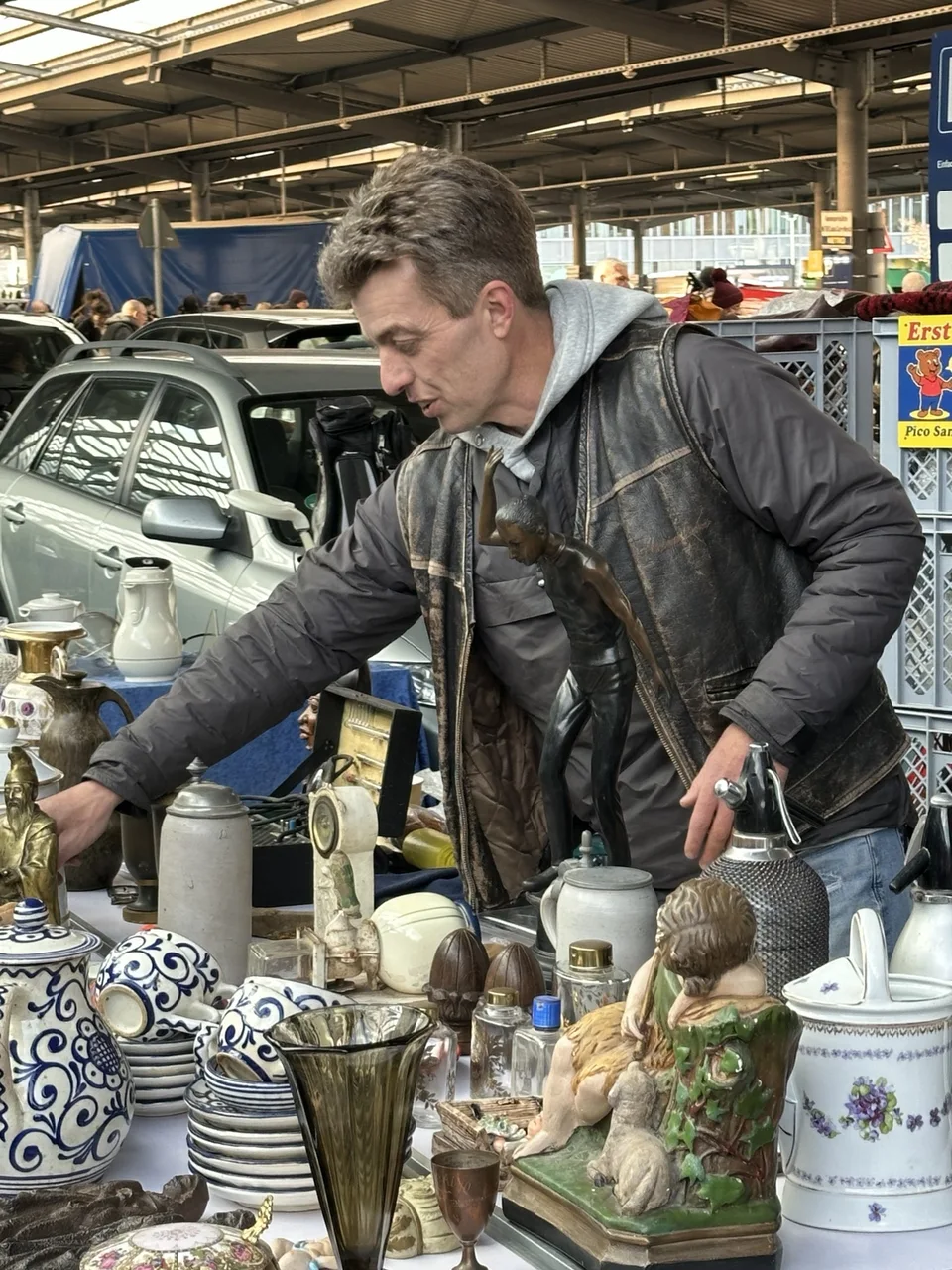
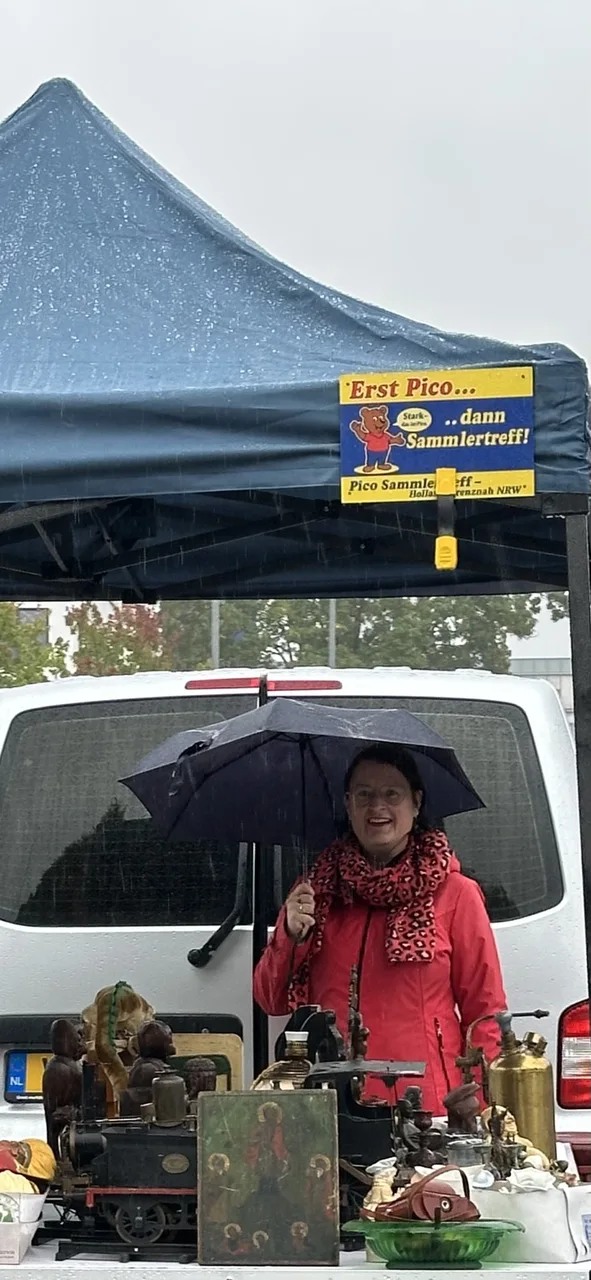
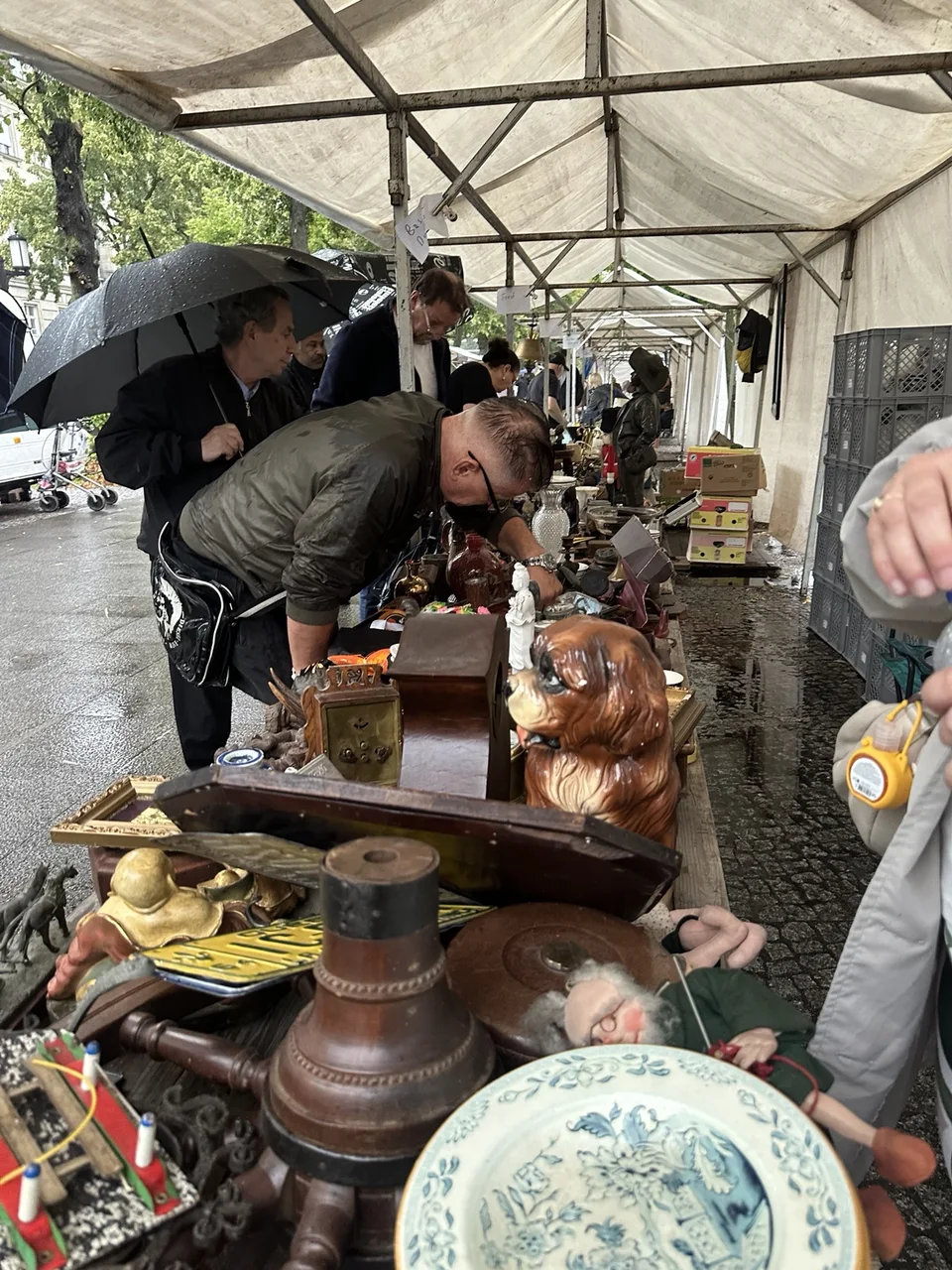
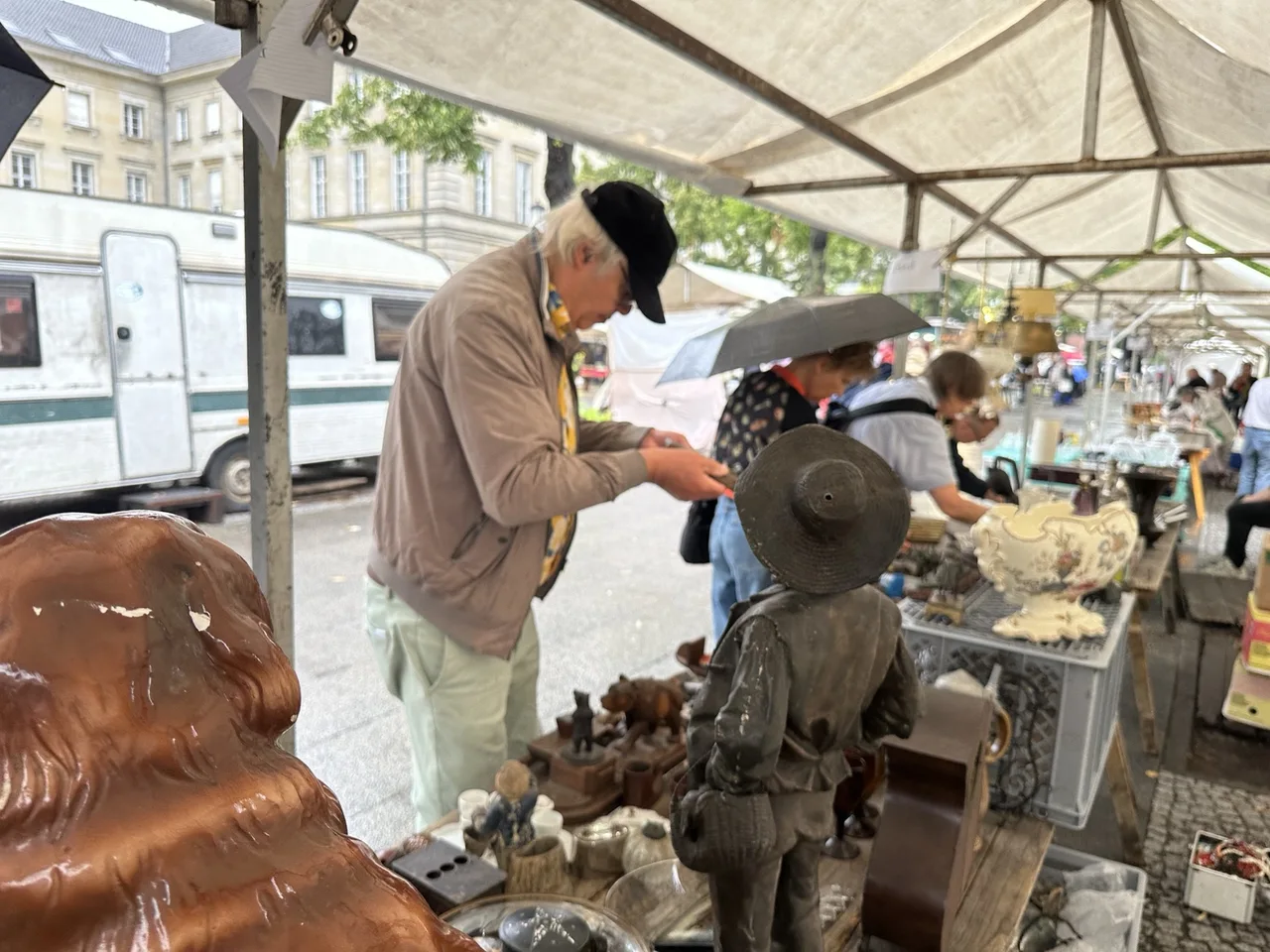
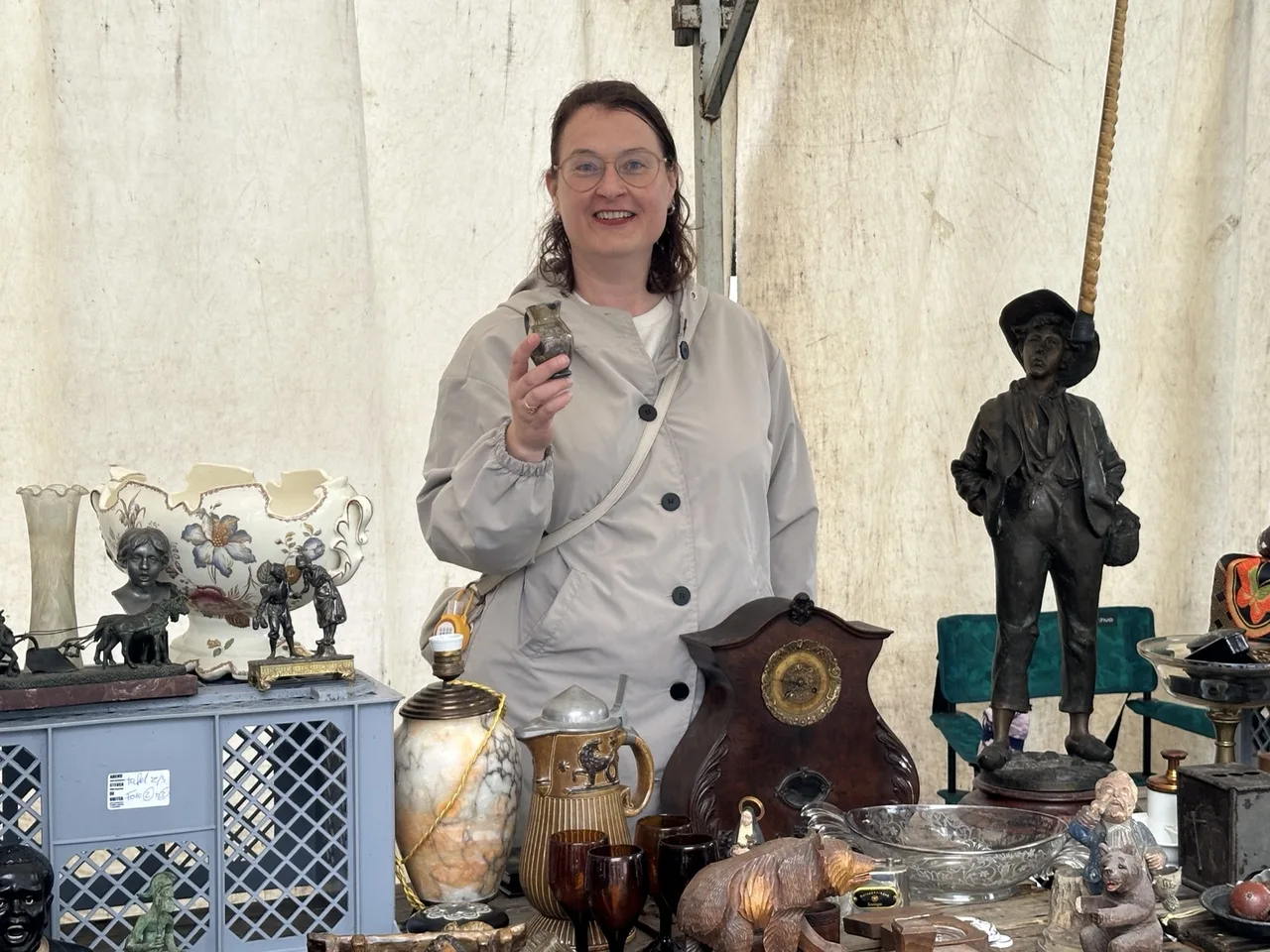
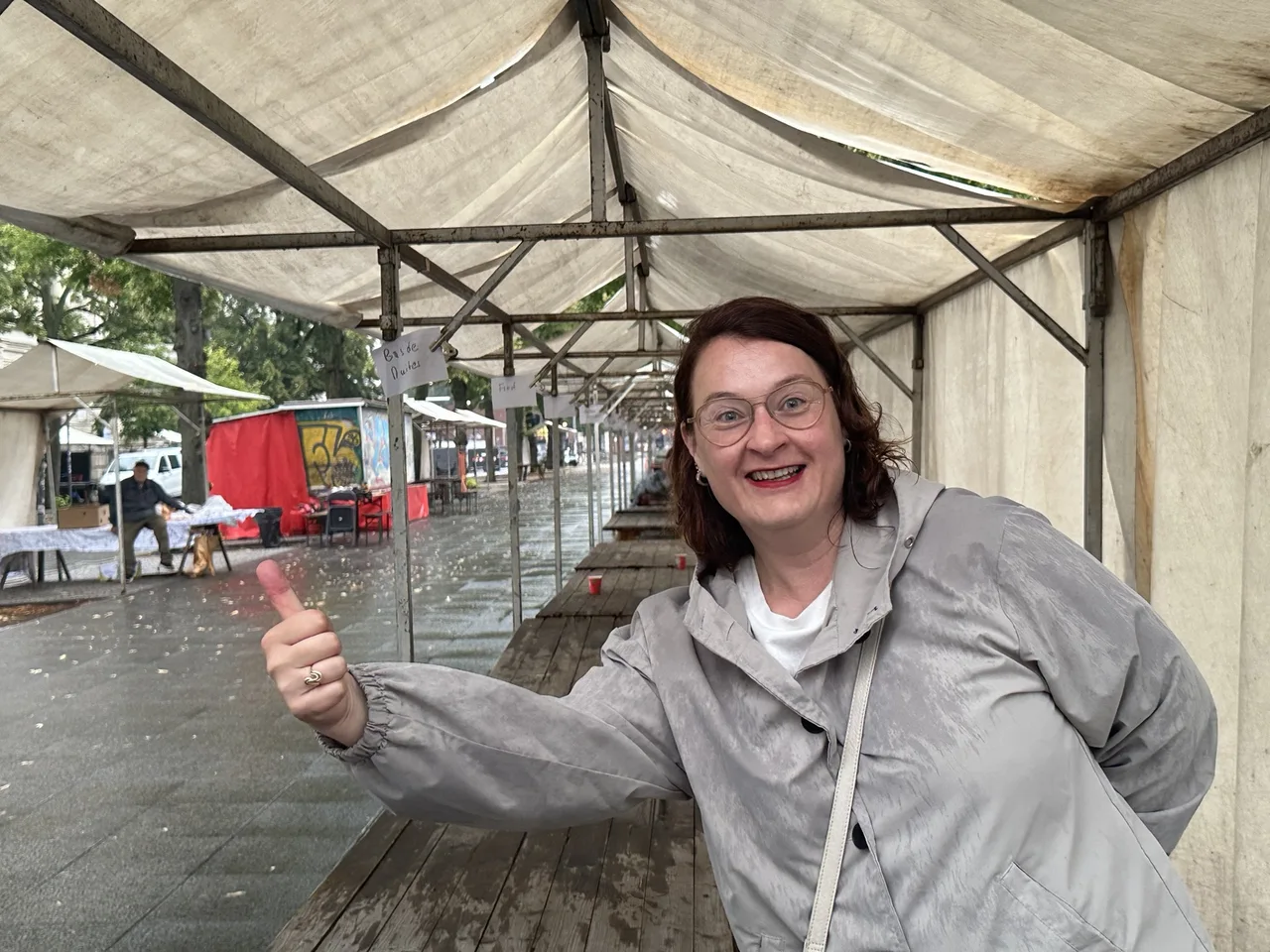
My father started out at the market in Weerselo in the 1970s. I started in Berlin 25 years ago, though I already had a market permit in Amsterdam before that. I was at school in Amsterdam at the time and was trying to keep my fridge a little fuller. Sometimes I set up next to the vegetable and fish sellers at the market; other times I took my wares round to the antique shops in town. I still trade with some of those shops today. Thank you for that.
I got a lot of enjoyment out of the markets. That’s why we started trading at markets again this summer, under the name Pico Sammlertreff.
Berlin feels like coming home. Düsseldorf is new.
A market like this is society in miniature. So many different people from all over the world, together at one market.
The market is where I learn the most. In Berlin, the market draws a lot of tourists. In Düsseldorf, more visitors come from the surrounding area. I take smaller pieces to both markets. I see what catches people’s eye and try to adjust what I bring accordingly.
At A.S. de Ruiter in Vaassen, we have a varied stock. That’s where I choose what to take to each market. I don’t just sell at markets. I always look for things to buy, too.
I still enjoy it just as much.
In 1950, my father moved with his parents from Apeldoorn to Vaassen, a few kilometres away. They settled in a neighbourhood known locally as ‘de Pico’. My grandfather built a barn there and traded in antiques, old objects and scrap materials. That’s how we still describe our trade today.
There were some old boxing gloves in one lot. Next thing you knew, the whole neighbourhood was up on the heap, boxing. Burning cables? The neighbour shut her windows. That’s what the whole neighbourhood was like. Big families. Everyone tried to earn a bit of money and help each other. De Pico.
My grandfather bought some of his stock from the Domeinen, where goods the Dutch government no longer needed were sold at auction. My grandfather loved auctions. Even back then, for example, he went to Derksen on Amsterdamseweg in Arnhem. The auction house is still around today.
Back then they drove an Opel Blitz with Venz adverts on its tarpaulins.
As a child, my father helped my grandfather at markets, including at the old Waterlooplein in Amsterdam. Back then, there were all sorts of warehouses around the spot where the Stopera now stands.
All sorts of things were sold at the market: antiques, rags from around the city, shoes and second-hand furniture. In a way, that market was a forerunner of today’s second-hand and vintage shops.
My grandfather once bought the contents of the old Catholic hospital in Apeldoorn. The iron beds and bedside cabinets were sold at Waterlooplein. Not as industrial design, but simply to be put back to use in Amsterdam homes.
Or that big batch of rejected aluminium slag from the Ruhr. I reckon it’s still doing the rounds.
So soon after the war, it was a time of getting by. If they’d made a bit of money at the market, my father was allowed to go to the afternoon showing at Tuschinski between unloading and loading up again. Front row, sixty cents, croquette included. Such were the times, such were the people.
At thirteen, my father started working at Ten Katen, a scrap iron and metals dealer in Apeldoorn. He did some of the buying and sorted metals. Thirty-four kinds, if I remember correctly.
The Apeldoorns Kanaal was still used for freight back then. They loaded barges with bundles of iron, stacking the load above the rim of the hold. Sorting, loading and unloading were all still done by hand. The first magnet was a big help.
He also set aside antiques, bicycles and other everyday items to resell. A ‘shop’ opened on the premises.
My father often talked about Mr Polak from Middelburg. He came to Ten Katen with a chauffeur in a cap to take stock. That made quite an impression at the time. ‘Ruitertje, everything will be all right,’ he always said to my father.
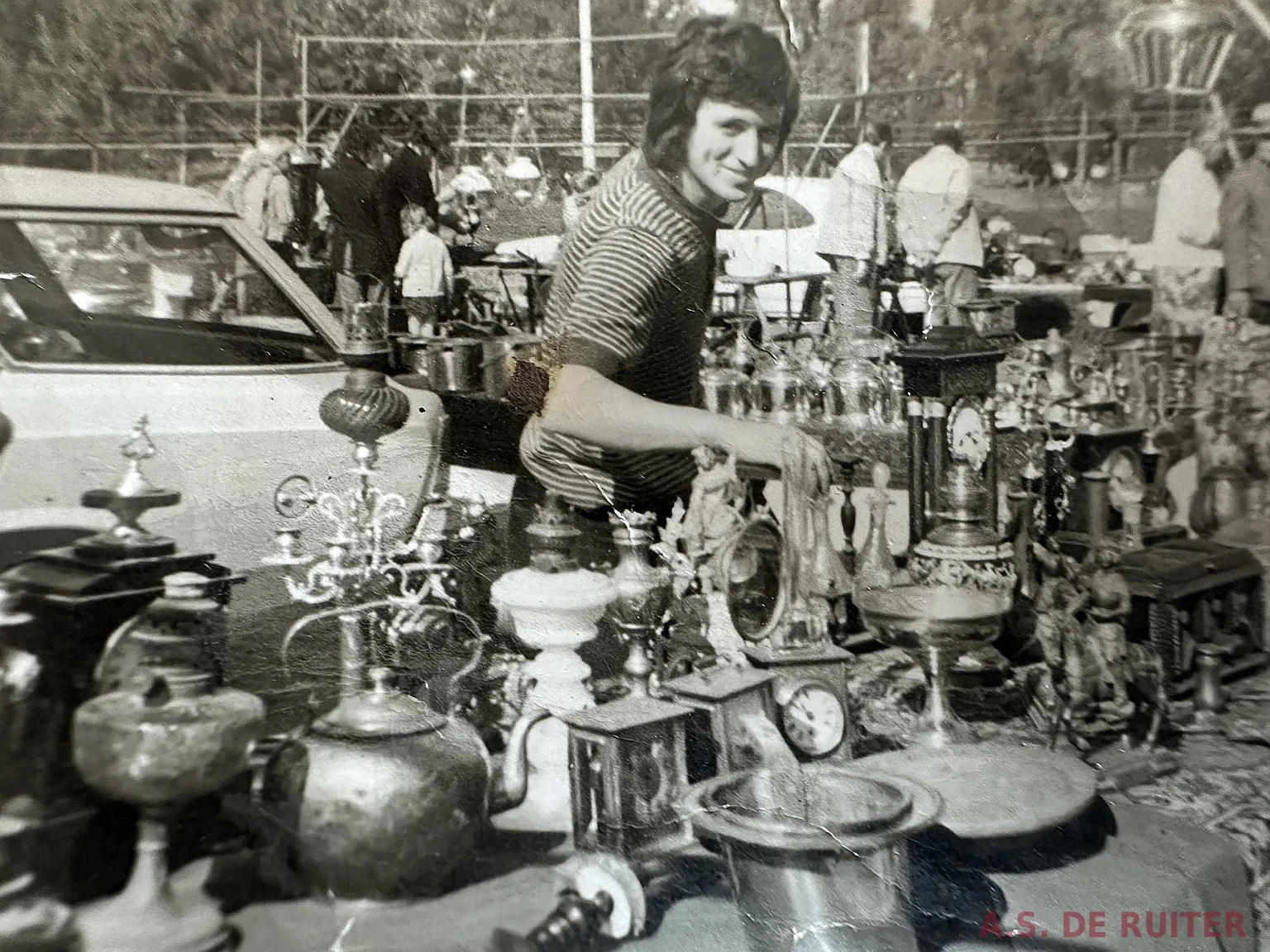
Much to my father’s regret, Ten Katen closed. In the 1970s he went into business for himself and traded at several markets, including Weerselo (see photo). He was 23 at the time. That was 55 years ago.
That’s how it started.
Now we’re back on the market ourselves, under the name Pico Sammlertreff. It’s a name I’m glad to keep alive. When my father saw the Pico sign, he smiled. That said enough for me.